
The journal · Newborn basics
The Vitamin K Shot for Newborns: What It Prevents, and Why Every Baby Gets One
In short
Babies are born with very little vitamin K, the nutrient blood needs to form a clot, and breast milk does not contain much of it. Without a shot, a baby can bleed internally — most dangerously into the brain — any time in the first six months, and the CDC says that in most cases there are no warning signs first. One injection of 1 mg into the thigh, given within six hours of birth, prevents it. The American Academy of Pediatrics has recommended it for every newborn since 1961, the oral form is not an equal substitute, and the 1990s study that linked the shot to childhood cancer has never been reproduced.
Your baby is maybe twenty minutes old. Somebody is doing the first weigh-in, somebody else is talking about a hearing screen, and in the middle of all of it a nurse mentions a small shot in the thigh. It happens so fast and so matter-of-factly that a lot of parents only look it up later, usually at 2 a.m., usually after reading something alarming.
So here is the whole thing in plain terms, with every claim traced to the CDC, the American Academy of Pediatrics, or MedlinePlus. The vitamin K shot is not a vaccine. It is one dose of a nutrient your baby is genuinely short of, and it prevents a bleeding problem that is rare, preventable, and — this is the part that matters most — usually silent until it is already serious.
01Why a newborn is short of vitamin K in the first place
Vitamin K is what blood uses to clot. MedlinePlus puts it simply: "Vitamin K plays an important role in blood clotting." Without enough of it, a cut keeps bleeding, and so does a bruise you cannot see.
Every baby is born low on it, and there are two reasons for that, both of which the AAP spells out. First, your baby did not get much from you: "Unlike many other nutrients, vitamin K doesn't pass through the placenta very easily." Second, your baby cannot make much yet, because "babies' intestines don't have very many bacteria yet, so their bodies can't make enough vitamin K." Adults rely on gut bacteria for part of their supply. A brand-new gut has not been settled by those bacteria yet.
And breast milk does not close the gap. The AAP is direct about it: "Breast milk does give your baby a little bit of vitamin K. But it's not enough to prevent VKDB." The CDC says the same thing — "breast milk contains low amounts of vitamin K." This is not an argument against breastfeeding. It is the reason the shot exists, and it is a close cousin of why breastfed babies also need a daily vitamin D supplement — we covered that separately in our guide to vitamin D drops for babies.
02What vitamin K deficiency bleeding actually is
The condition the shot prevents is called vitamin K deficiency bleeding, usually shortened to VKDB. The CDC's definition is one sentence: "Vitamin K deficiency bleeding (VKDB) occurs when babies cannot stop bleeding because their blood does not have enough vitamin K to form a clot."
It can show up anywhere. MedlinePlus lists bleeding at the circumcision site, around the belly button, and in the gastrointestinal tract, up to and including bleeding inside the skull. The CDC notes bleeding "can occur anywhere on the inside or outside of the body," and that bleeding "into their brain" can cause "brain damage and even death."
It also does not all happen in the delivery room. The CDC splits it into three windows:
- Early-onset — "within the first 24 hours after birth"
- Classical — "2 days – 1 week after birth"
- Late-onset — "1 week – 6 months after birth, most commonly 2 – 8 weeks"
That last window is the one worth sitting with. A baby who did not get the shot is still at risk months later, at home, long after anyone is watching for it. And the CDC's provider fact sheet is specific about who it tends to happen to: late VKDB "tends to occur in exclusively breastfed infants who have received no or inadequate vitamin K prophylaxis."
The hardest fact to argue with
The CDC puts it in capital letters, which is unusual for the CDC: "In the majority of cases of VKDB, there are NO WARNING SIGNS before a life-threatening event starts." That is what makes this different from most newborn risks. There is no symptom to catch early, no stage where you notice something is off and call the doctor in time. Prevention is the only part of this you get to control, and it is a single shot at birth.
03The numbers, honestly
VKDB is uncommon, and anyone telling you otherwise is overselling. The CDC puts early and classical VKDB at "1 in 60 to 1 in 250 newborns," and late VKDB at "1 in 14,000 to 1 in 25,000 infants."
What the shot changes is the odds, sharply. The CDC states that "infants who do not receive a vitamin K shot at birth are 81 times more likely to develop late VKDB," and its provider fact sheet gives the same figure for VKDB overall: babies who skip the shot are "at 81 times greater risk for developing VKDB than infants who do get the shot."
And when it does happen, it is serious. The AAP states that "one in five (20%) of babies who develop VKDB will die." Put the two numbers together and you have the shape of the decision: a rare event, with no advance warning, that kills one in five of the babies it reaches, prevented almost entirely by one injection.
This is also not a stable, solved problem. The AAP reports that refusal of the vitamin K shot rose from 2.9 percent in 2017 to more than 5 percent in 2024, and the AAP's news coverage notes that more parents refusing the shot "has led to an increase in the numbers of babies with late-onset vitamin K deficiency bleeding (VKDB)."
04What the shot is, exactly
There is very little to it, which is part of why it goes by so quickly in the delivery room.
The vitamin K shot, start to finish
- One dose, 1 milligram. The AAP's guidance, as quoted in HealthyChildren.org: "Vitamin K should be administered to all newborn infants weighing >1500 g as a single, intramuscular dose of 1 mg within six hours of birth." (1,500 grams is about 3 pounds 5 ounces; a smaller or very premature baby gets a dose set by their own care team.)
- In the thigh muscle. The CDC describes "administration of vitamin K (1 mg) into a thigh muscle after birth." Cleveland Clinic explains why there: the thigh is "an area with fewer major nerves and blood vessels — to lower the risk of injury."
- Within six hours of birth. The AAP says "the injection is given in your baby's thigh within 6 hours of birth," and the CDC's fact sheet notes the shot "can be delayed up to 6 hours after birth" — so asking to finish skin-to-skin and a first feed first is a reasonable request, not a refusal.
- Once, and that is it. There is no second dose and no follow-up schedule. The CDC: "one shot given after birth will protect your baby from VKDB."
- Side effects are small and local. Cleveland Clinic lists "brief pain during the injection," plus possible "redness or swelling at the injection site" and "mild bruising at the injection site," and says most babies "tolerate the vitamin K injection well," with effects that are "usually very mild and short-lived."
It is also worth naming what it is not. Vitamin K is a nutrient, not a vaccine — the AAP's own fact-check page lists it as its own item in routine newborn care, separate from the hepatitis B vaccine and the antibiotic eye ointment. Declining or accepting one of those three says nothing about the other two, and you can decide each on its own.
05The 1990s cancer study you may have read about
If you have seen the claim that the vitamin K shot causes childhood cancer, it traces back to one piece of research from the early 1990s, and both the CDC and the AAP address it head-on rather than ignoring it.
The CDC states it plainly: "A study from the early 1990s found a possible link between intramuscular vitamin K administration and leukemia. Multiple follow-up studies did not confirm these findings." The AAP describes the same history: "None of the studies have ever been able to find that link again."
That is how this is supposed to work. A single study raised a question, a lot of other researchers went looking, and nobody could find it. Meanwhile the AAP's verdict on the shot itself is three words long: "Yes, vitamin K shots are very safe." The AAP has backed giving it to every newborn since 1961 — more than fifty years of use — which is a longer track record than almost anything else that happens in a delivery room.
06Why oral vitamin K is not an even trade
This is the question most parents who hesitate actually want answered: if the concern is the needle, can the baby just take it by mouth instead?
The honest answer is that it is not the same protection. The AAP explains the mechanics: "Babies can't absorb the oral form very well, so it doesn't work well to prevent VKDB. A vitamin K shot is the safest and best option." The AAP's fact-check page adds a second, more practical problem: oral vitamin K is less effective than the injection and has not been approved by the Food and Drug Administration. Cleveland Clinic notes the oral route "requires multiple doses and careful follow-up" — a schedule stretched over months, at exactly the stage of life when keeping track of anything is hardest.
So the trade is not "shot or drops." It is one dose with a sixty-year record against a less-absorbed, unapproved form that depends on a series of doses all landing on time.
07If you are still weighing it
Two things are true at once: this is your decision to make, and the people asking you to make it are not trying to rush you past a concern.
The AAP's own ask of parents is just a conversation. Dr. Hand, quoted in HealthyChildren.org: "We strongly recommend that parents bring their questions to us and help us understand any concerns" — adding that this "bleeding disease can be devastating and is totally preventable."
The practical move is to settle it before you are in labor, not during. Put it in writing with the rest of your preferences — our guide to writing a birth plan covers how to record the newborn-care choices that get decided in the first hour, so nobody has to ask you a medical question while you are being stitched up. And if you do decline, tell your pediatrician at the first visit, because the risk window runs to six months, and they will want to know what to watch for.
This is general information, not medical advice
Everything above is sourced from the CDC, the American Academy of Pediatrics, Cleveland Clinic, and MedlinePlus, but it cannot account for your baby. Your pediatrician, OB, or midwife knows your history, your baby's birth weight and gestational age, and any bleeding or liver condition that changes the picture — ask them, and ask before the birth if you can. If your baby bruises easily, bleeds longer than expected from the belly button or a circumcision, has blood in their stool, or becomes unusually sleepy, irritable, or pale, call your pediatrician right away rather than waiting it out.
08One decision, made early, stays made
The first hour after a birth is a strange time to be handed a medical choice, and the vitamin K shot is one of a small handful that arrive in exactly that window. The fix is not to read faster at 2 a.m. — it is to decide it in advance, when you have the attention to spare.
The rest of those first-hour and first-week decisions are laid out the same way, each one sourced, in our newborn basics guide. And if you are still pregnant, our free week-by-week planner puts this kind of prep in the middle of pregnancy instead of the last tired stretch — so the questions that get asked in the delivery room already have your answers.
Questions parents actually ask
Is the vitamin K shot for newborns necessary?
The American Academy of Pediatrics has recommended it for every newborn since 1961, and the CDC calls the shot the easiest and most reliable way to prevent vitamin K deficiency bleeding. Babies are born low on vitamin K because it does not cross the placenta easily and their intestines do not yet have the bacteria that make it, and breast milk does not contain enough to close the gap. The CDC reports that infants who do not get the shot are 81 times more likely to develop late vitamin K deficiency bleeding.
Is the vitamin K shot safe for babies?
The AAP's answer is "Yes, vitamin K shots are very safe," and it has been given routinely to newborns since 1961. Cleveland Clinic lists the common side effects as brief pain during the injection and possible redness, swelling, or mild bruising at the injection site, and says most babies tolerate it well with effects that are mild and short-lived.
Does the vitamin K shot cause leukemia or childhood cancer?
No study since the original has found that link. The CDC states that a study from the early 1990s found a possible link between the intramuscular vitamin K shot and leukemia, and that multiple follow-up studies did not confirm the findings. The AAP puts it the same way: none of the later studies have ever been able to find that link again.
Can my baby get vitamin K by mouth instead of a shot?
It is not an equal substitute. The AAP says babies cannot absorb the oral form very well, so it does not work well to prevent vitamin K deficiency bleeding, and that the shot is the safest and best option. The AAP also notes that oral vitamin K is less effective than the injection and has not been approved by the Food and Drug Administration, and Cleveland Clinic points out that the oral route requires multiple doses and careful follow-up over time.
When and where is the vitamin K shot given?
As a single 1 mg injection into the thigh muscle within six hours of birth, for newborns weighing more than 1,500 grams (about 3 pounds 5 ounces), per the AAP guidance quoted by HealthyChildren.org. The CDC notes it can be delayed up to six hours after birth, so asking to finish skin-to-skin time and a first feed first is a normal request. Cleveland Clinic explains the thigh is used because it has fewer major nerves and blood vessels.
What are the signs of vitamin K deficiency bleeding?
Often there are none until it is serious — the CDC states that in the majority of cases there are no warning signs before a life-threatening event starts. When signs do appear, MedlinePlus describes bleeding from the circumcision site, the belly button area, or the gastrointestinal tract, and the AAP mentions bruising and intracranial bleeding. The risk window runs from birth to six months of age, with late cases most common between two and eight weeks.
Sources
- CDC — About Vitamin K Deficiency Bleeding — Definition of VKDB as babies being unable to stop bleeding because their blood lacks enough vitamin K to clot; only small amounts of vitamin K cross the placenta; the bacteria that produce vitamin K are not yet in a newborn's intestines; breast milk contains low amounts of vitamin K; the three types and their timing (early-onset within 24 hours, classical 2 days to 1 week, late-onset 1 week to 6 months, most commonly 2-8 weeks); infants who do not receive the shot are 81 times more likely to develop late VKDB; early and classical VKDB occur in 1 in 60 to 1 in 250 newborns and late VKDB in 1 in 14,000 to 1 in 25,000 infants; in the majority of cases there are no warning signs before a life-threatening event; bleeding can occur anywhere inside or outside the body and bleeding into the brain can cause brain damage and death; one shot into a thigh muscle prevents it.
- HealthyChildren.org (AAP) — Why Your Newborn Needs a Vitamin K Shot — Vitamin K does not pass through the placenta easily; babies' intestines do not have many bacteria yet so they cannot make enough vitamin K; breast milk provides a little vitamin K but not enough to prevent VKDB; the injection is given in the thigh within 6 hours of birth; pediatricians have recommended the shot for all newborns since 1961; babies cannot absorb the oral form well so it does not work well to prevent VKDB and the shot is the safest and best option; "Yes, vitamin K shots are very safe"; the 1990s childhood-cancer study has never been replicated.
- CDC — How to Protect Babies from Life-threatening Bleeding (provider fact sheet) — Administration of vitamin K (1 mg) into a thigh muscle after birth can prevent intracranial bleeding; the shot can be delayed up to 6 hours after birth; routinely given to newborns since 1961 on AAP recommendation; late VKDB tends to occur in exclusively breastfed infants who received no or inadequate vitamin K prophylaxis; breast milk contains only low levels of vitamin K; infants who do not get the shot are at 81 times greater risk of developing VKDB; a study from the early 1990s found a possible link to leukemia and multiple follow-up studies did not confirm the findings.
- American Academy of Pediatrics — Vitamin K Helps Prevent Dangerous Bleeding Disorders in Newborns — All babies are born with low levels of vitamin K and are more susceptible to bleeding disorders like VKDB; the AAP has supported vitamin K administration for over 50 years; one in five (20%) of babies who develop VKDB will die; babies without the shot are 81 times more likely to develop VKDB; oral vitamin K is less effective than intramuscular injection and has not been approved by the FDA; vitamin K is listed as a separate item in routine newborn care alongside erythromycin eye ointment and the hepatitis B vaccine; refusal rates rose from 2.9% in 2017 to over 5% in 2024.
- MedlinePlus (NIH) — Vitamin K and newborns — Vitamin K plays an important role in blood clotting; vitamin K does not move easily across the placenta and the bacteria that make it are not yet present in a newborn's gastrointestinal tract; breast milk contains minimal amounts; the AAP recommends giving every baby a shot of vitamin K immediately after birth; bleeding can occur at the circumcision site, the belly button area, and in the gastrointestinal tract, including intracranial hemorrhage.
- Cleveland Clinic — Why Babies Need Vitamin K at Birth — The shot is given in the thigh because it is an area with fewer major nerves and blood vessels, lowering the risk of injury; it is given soon after birth by hospital staff; common side effects are brief pain during the injection plus possible redness, swelling, or mild bruising at the injection site; most babies tolerate the injection well and side effects are usually very mild and short-lived; the oral form requires multiple doses and careful follow-up.
- HealthyChildren.org (AAP) — Newborns Need Vitamin K Shortly After Birth to Prevent Bleeding Disease — Vitamin K should be given to all newborns weighing more than 1,500 g as a single intramuscular dose of 1 mg within six hours of birth; more parents refusing the shot has led to an increase in babies with late-onset VKDB; late-onset VKDB is usually associated with exclusively breastfed infants who did not receive vitamin K prophylaxis at birth; signs can include bruising and life-threatening intracranial hemorrhage; the AAP's advice that parents bring their questions to their pediatrician, and that the bleeding disease can be devastating and is totally preventable.
Newborn Weeks is planning help, not medical advice — always follow your own doctor, midwife, or pediatrician.
From the gear guide
- Sleepy Wrap Baby Sling Carrier — our pick in baby carriers
- Momcozy Easy-On Wrap Carrier — our pick in baby carriers
- Graco Made2Grow 5-in-1 Highchair — our pick in high chairs
- Delta Children Foam Contoured Changing Pad — our pick in diaper bags & changing pads
Keep reading
 Sleep · 13 min read
Newborn Day-Night Confusion: Why Your Baby Is Up All Night (and What Actually Helps)
Newborn day-night confusion is a body clock that isn't built yet. What the AAP and sleep research say actually helps, and when it ends on its own.
Read the article Feeding · 14 min read
Baby Won't Take a Bottle? What Actually Helps, Step by Step
Baby won't take a bottle? The AAP-, La Leche League- and CDC-backed fixes that help: who offers it, when, how warm the milk is, and when to call the doctor.
Read the article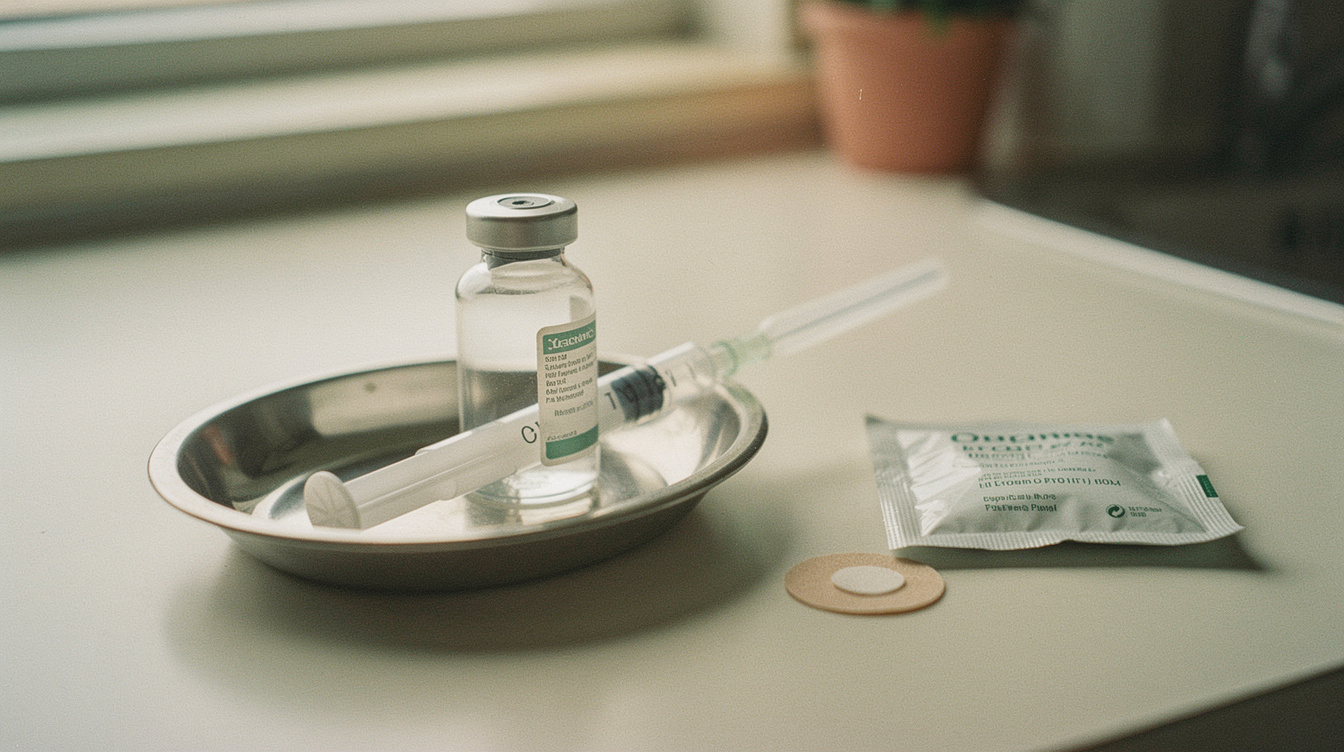 Pregnancy · 13 min read
The Tdap Vaccine in Pregnancy: Why It's Given at 27 to 36 Weeks
The Tdap vaccine in pregnancy is given at 27 to 36 weeks so antibodies reach your baby before birth. What the CDC says about timing and safety.
Read the article